
Home Services
September 22, 2026

Home Services
8 min read


CSO, Co-Founder at Explore Agency
Bohdan (Bo) leads strategy at Explore Agency, where he and his team develop growth systems for businesses in the home services, healthcare, and legal sectors. Their work centres on helping organizations achieve more predictable and profitable growth.
Book a Discovery CallEffective basement waterproofing marketing measures one thing: how many ad dollars turn into booked jobs. Most owners run a single budget across two demand types, same-day emergency calls and multi-week planned installs, with no attribution connecting spend to either result. That is why spending can grow while the schedule stays flat.
Consider a typical spring month: the ad account reports its best lead month of the year, yet the crew still has gaps in the schedule. The agency report called it a strong month. Everything after that first number was invisible, and there was no data to fix the leak or scale what worked.
Trace 40 recent form fills through your CRM. Count how many became booked estimates, how many estimates became signed jobs, and how many jobs generated a Google review. Most waterproofing owners find the marketing report reflects only the first number.
Cost per booked job, not cost per lead, is the number that tells you what a channel actually costs to produce revenue. When attribution stops at the lead count, spending more is the only lever available, with no data to confirm it helps.
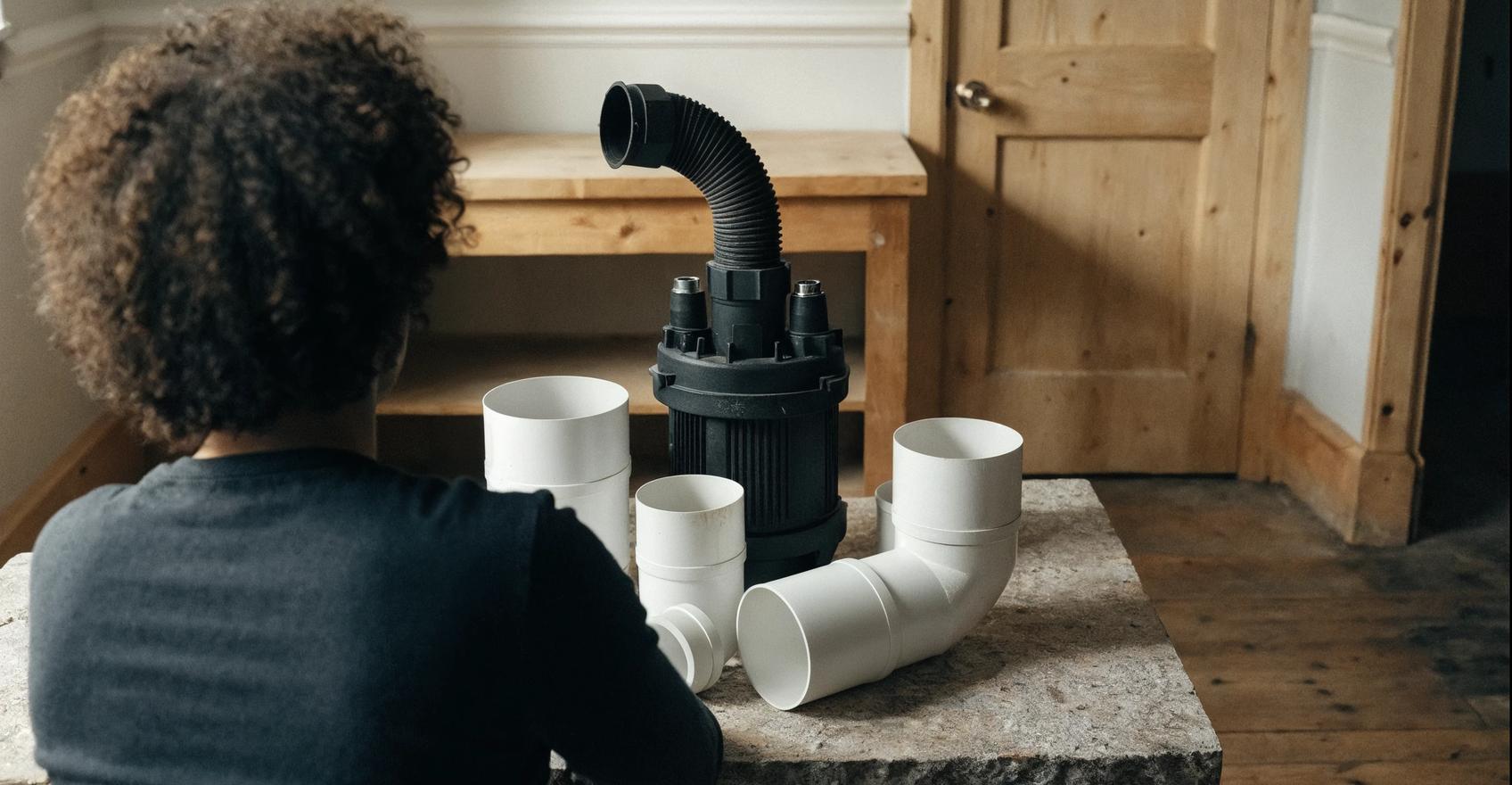
A sump pump failure and a French drain installation are not the same product. They attract buyers in different mental states, with different search behaviors, close timelines, and conversion levers. Running both from one undifferentiated budget means the campaign cannot optimize for either.
Emergency call funnel:
Planned installation funnel:
When a homeowner has water coming in today, speed to the top of results matters as much as speed on the phone. Local Services Ads give your company a trust badge before the organic results appear, and their star-rating display works as an immediate credibility signal. Call-only ads eliminate the form-fill step, which is the right format when the buyer is not browsing options.
Response time after the call comes in closes the loop. A lead called back in under 15 minutes typically has a higher close rate than one reached hours later when a homeowner has standing water. That operational difference is what makes emergency-intent campaigns structurally different from the rest of your budget.
Planned waterproofing jobs unfold over weeks. The homeowner gets two or three in-home estimates, compares approaches and prices, researches reviews, and often needs a financing conversation before signing. What your marketing must deliver between the first inquiry and the signed contract is review volume, follow-up sequences, and before/after proof.
An "estimate sent" sitting in your CRM for 18 days without follow-up automation is a workflow gap that a lead count report will never surface. Post-estimate sequences in text and email keep your company in the conversation while the homeowner compares bids.
Most waterproofing companies operate with three vendors who share a goal but no shared data: an ads agency, a web developer, and an SEO firm. When results are flat, each blames the other, and none owns the revenue number. That fragmentation is the attribution problem made structural.
Home services companies across plumbing, roofing, and drainage trades hit the same wall when paid media, website, and SEO run as disconnected contracts. What changes when those three systems run as one integrated marketing operation is that a click traces to a campaign, the campaign to a phone call, the call to a booked estimate, and the estimate to a signed job. Budget decisions become clear. The channels worth scaling separate from the ones worth cutting.
Most waterproofing Google Ads accounts count calls as conversions. A call is not a booked job. With ticket sizes that run from a minor crack seal to a full exterior excavation, optimizing for calls versus optimizing for booked estimates produces different campaign behavior and different crew schedules.
When the conversion event is a call, the algorithm learns to generate calls. Some book jobs; many do not. When the conversion event is a booked estimate, pulled from your CRM and fed back to the ad platform, the algorithm learns something more accurate and more useful. Campaign structure should also reflect the two-funnel reality: separate budgets and bid strategies for emergency-intent keywords versus planned-project keywords, with call-only formats for urgency searches and broader match for planned-project intent.
"Best basement waterproofing near me" now surfaces an AI-generated answer before the map pack appears for many searches. Google's AI Overviews pull structured content from pages that answer the query directly, which means a company without clear service-area pages and structured FAQ content can be invisible at that surface regardless of its map-pack position.
The spring thaw window, roughly March through May, is when emergency search volume spikes and closes fast. Companies that build topical authority and review velocity before the season capture that surge at lower cost per click than those trying to buy in once demand arrives. Seasonal demand is a content and review infrastructure problem. It needs solving in January, not April.
Get started
We help businesses turn strategy into measurable growth through better positioning, websites, paid media, SEO, and AI systems. Let’s look at what’s holding growth back and what to fix first.
Google reviews close waterproofing jobs by solving the trust problem that every homeowner carries into the buying process. This trade involves strangers excavating a basement or cutting through walls. Review volume and recency visible in search results are what makes a homeowner comfortable letting your crew through the door.
Before/after photos carry outsized weight in this category. A split image showing a flooded basement beside the same space dry after installation answers the one question every prospect carries: does this actually work? Companies like Drain Express and Drain Ridge show the impact of review accumulation and visual proof on planned-project buyers.
Review velocity matters beyond aggregate count. A company with 80 reviews, the most recent from eight months ago, reads differently than one with 60 reviews and three posted in the last two weeks. Regular review requests, automated after job completion, keep the recency signal active for the homeowner comparing multiple estimates. Building review infrastructure is where basement waterproofing marketing pays dividends long after the campaign that generated the job has ended.
These five metrics connect your basement waterproofing marketing activity to crew utilization and revenue. Track them weekly to see whether your campaigns are producing the right jobs, not just the most leads.
No fixed percentage applies across companies. The right number depends on target job volume, average ticket, and current close rate. Working backward from a target cost per booked job is more useful than allocating a share of revenue.
More leads are not always the right goal at this ticket size. Improving response speed, review count, and follow-up on inquiries your company already receives often produces more booked jobs than increasing ad spend on a funnel that already leaks.
Emergency-intent searches favor paid because speed to the top of results matters when a homeowner has water in the basement today. Planned-project research favors local SEO and AI Overview presence because that buyer spends weeks comparing options. Both channels serve the same waterproofing company and cover different parts of the same funnel.
Spring snowmelt, roughly March through May, drives high-urgency emergency searches with fast close timelines. Summer and early fall shift toward planned renovation intent with longer sales cycles and more price comparison. Running the same creative and budget allocation year-round means missing the spring surge when it is cheapest to appear.
Explore Agency runs paid media, web and SEO as one integrated system — with revenue tracked to real booked jobs.
Articles
Home Services
September 22, 2026

Home Services
September 21, 2026

Home Services
September 20, 2026

Home Services
September 19, 2026