Home Services
September 23, 2026

Home Services
16 min read


CSO & Co-Founder at Explore Agency
Bohdan (Bo) leads strategy at Explore Agency, where he and his team develop growth systems for businesses in the home services, healthcare, and legal sectors. Their work centres on helping organizations achieve more predictable and profitable growth.
Book a Discovery CallHow to get more plumbing leads comes down to three owned channels: Google Business Profile, Google Ads, and organic search. Lead volume and booked-job rate regularly diverge, and the missing layer is attribution, not more ad spend. Your plumbing marketing system should connect every lead source to a confirmed job before you decide what to scale.
Your Google Ads dashboard reported 40 leads last month. Eleven turned into booked jobs. The natural conclusion is that the leads were low quality, the platform wasted the budget, or Google Ads simply does not work for plumbing. That conclusion is almost always wrong.
A lead arrived. Something happened between that arrival and a confirmed appointment. The callback came three hours later. The form fill sat in an email inbox until morning. The estimate was sent and never followed up. The platform logged a conversion; the job never made the schedule.
This is not a lead quality problem. It is a booking problem. The fix is a faster callback window, an after-hours capture process, and a follow-up sequence for estimates that go quiet. Owners who grasp this distinction stop blaming platforms and start building systems.
The pattern repeats regardless of company size: strong lead counts on the dashboard, a fraction that survive intake, and no clear picture of which sources produced the jobs that actually closed. Many owners who type "how to get more leads for my plumbing business" into a search engine are already generating enough volume to grow. The infrastructure to convert that volume into confirmed bookings is what is missing.

A plumbing lead costs what you paid for it divided by your close rate, not the price tag on the platform invoice. That single reframe changes the entire conversation about which channels are working.
The difference compounds. A shared lead from a platform like Angi or Thumbtack carries a lower sticker price than an exclusive inbound call, but that lead is delivered simultaneously to multiple competing plumbers. At a 20% close rate on shared leads, the real cost per booked job is the lead price divided by your close rate. The math reverses the apparent advantage quickly.
Here is a realistic comparison of lead sources by what they actually cost per booked job:
Lead Source Cost Reality
The owner who tracks cost per booked job by source makes fundamentally different budget decisions than the one who tracks cost per lead. One optimizes toward whatever generates calls; the other optimizes toward whatever books jobs.
No single channel dominates every residential plumbing scenario. The owner running Google Ads without GBP optimization loses the emergency search. The one who invests only in organic SEO waits months for pipeline. Knowing how to get more plumbing leads means understanding the tradeoffs across all channels and having attribution data to determine which ones are worth scaling.
Attribution is the thread. Owners who do not track which channels produce booked jobs, rather than just leads, end up in a loop: ad spend rises, lead count grows, the schedule stays inconsistent, and no budget decision is grounded in data.
Channel Priority Checklist (Ranked by Close Rate and Cost per Booked Job at Scale)
When a homeowner types "emergency plumber near me" at 11pm, three listings appear in the local pack. The plumber who shows up there gets the call. The ones below the pack rarely get a second look.
Three signals determine who appears: review velocity (how recently and how often new reviews arrive), profile completeness (services listed, photos uploaded, Q&A active), and proximity to the searcher. Google's local ranking documentation identifies relevance, distance, and prominence as the three factors, though their precise weight in any specific query is not publicly disclosed.
GBP Optimization Steps (Ranked by Impact on Emergency Search Visibility)
The Google Ads dashboard shows clicks, conversions, and cost per lead. None of those numbers appear on a job invoice. The metric the owner needs is cost per booked job, which the platform cannot produce without a connected CRM.
Callback speed drives the gap between reported leads and actual booked jobs. A homeowner who calls at 9am and hears nothing until noon has already booked elsewhere. The ad was charged at the click; the lead was lost in the response gap. That delay makes expensive, high-intent leads look like low-quality ones in the reporting.
Google Ads for plumbing also requires a landing page that converts. A click landing on a homepage with no click-to-call above the fold, slow load time on mobile, and no trust signals drains budget without producing calls. The ad and the landing page function as one unit. Optimizing the campaign without optimizing the page is optimizing half the system.
Shared leads are worth paying for in specific, narrow circumstances. They are not worth building a pipeline on.
A shared lead delivered to multiple competing plumbers looks financially attractive until close rate enters the calculation. At a 20% close rate, the real cost per booked job is the lead price divided by your close rate, not the lead price itself. Exclusive inbound calls from your own Google presence, even at a higher per-contact cost, carry a lower cost per booked job when the close rate advantage holds.
The case for shared platforms is early-stage volume. If owned channels are not yet generating enough calls to keep the crew busy, shared platforms fill that gap while GBP and SEO infrastructure matures. Treating them as the permanent primary pipeline is the mistake most owners make after the first year.

Commercial plumbing leads come primarily from Google Ads on commercial-intent keywords, a dedicated landing page built for RFQs, and direct outreach to property management companies. The channels and follow-up process are completely different from residential emergency service.
How to get more plumbing leads in the commercial segment requires building for a different buying process. Facilities managers do not search "emergency plumber near me" at 11pm. They run RFQs during scheduled site walks, compare vendors over several days, and rarely book on first contact.
A GBP optimized for homeowner emergencies will not surface when a property manager is comparing service contracts for a mid-rise building. These are two separate buyer types with different timelines, different decision processes, and different channels.
Commercial Lead-Gen Tactics
When owners ask "how to get more commercial plumbing leads," the answer starts with recognizing that you are running a different pipeline, not an extension of the residential one. The channel mix, keyword strategy, and follow-up cadence do not carry over.
The question of how to get more plumbing leads often starts at the ad platform. The answer frequently lies on the website that receives the click.
An ad that converts sends traffic to a page. If that page loads slowly on mobile, buries the phone number below a wall of text, or has no mechanism for after-hours submissions, the ad budget is doing the work and the website is losing the result. The lead does not reach the calendar.
Four failure points account for most of the conversion drop-off between a paid click and a booked appointment:
Website Conversion Checklist
The conversion problem amplifies the lead cost problem. A website with a weak mobile experience and no after-hours response mechanism quietly multiplies the effective cost of every lead the ad campaign generates.
Get Started
We help businesses turn strategy into measurable growth through better positioning, websites, paid media, SEO, and AI systems. Let’s look at what’s holding growth back and what to fix first.
A homeowner with water pooling under the kitchen sink at 11pm is not waiting until morning. They search, find three listings, and call whoever responds first. Ranking in the local pack is necessary. Answering first is what closes the job.
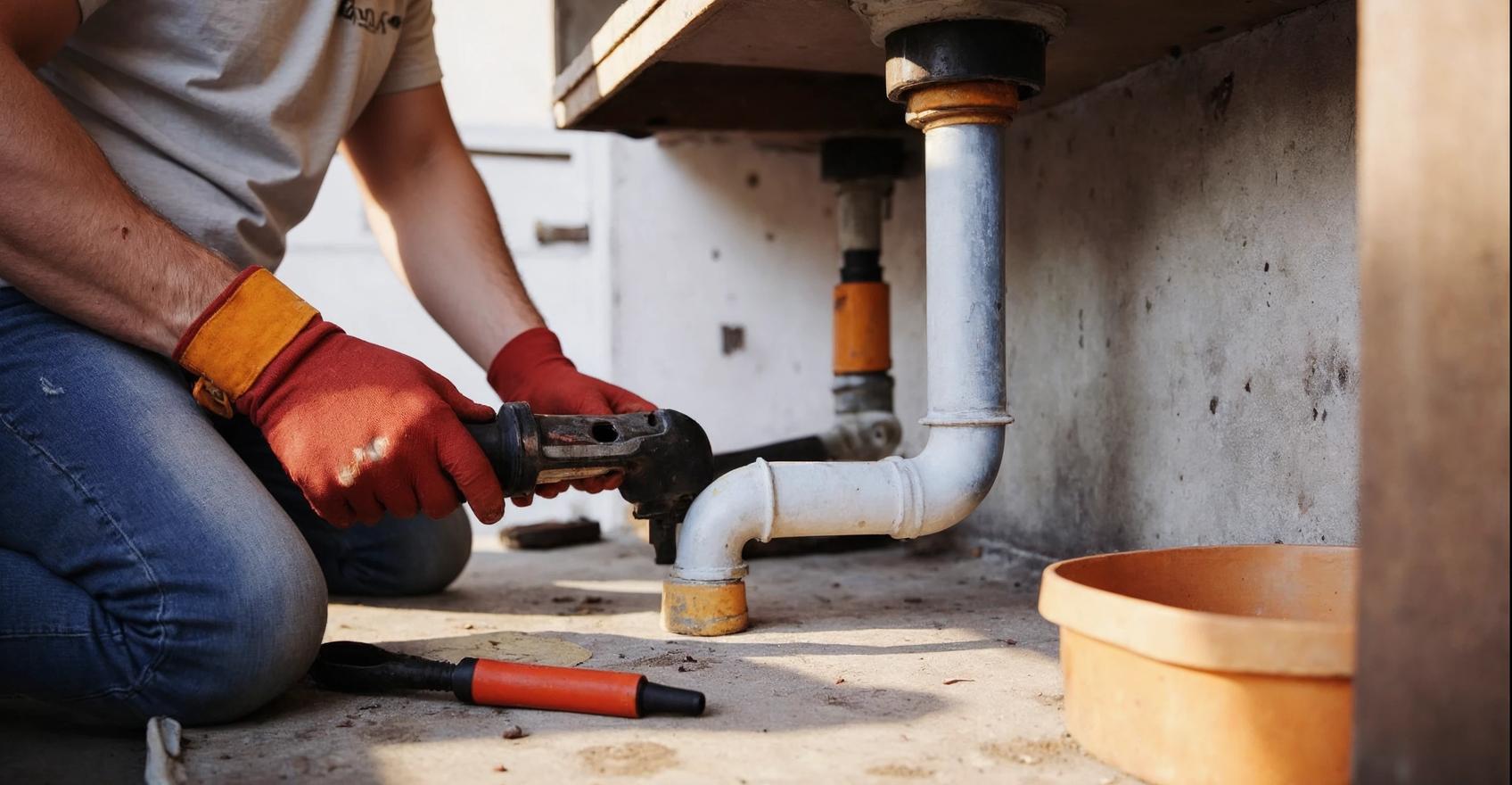
The after-hours gap is where booked jobs go when the office closes. No live answering service, no automated SMS reply, no real-time form alert: the lead moves to whoever has those systems in place.
After-Hours Capture Checklist
The homeowner at 11pm does not distinguish between a business that is closed and one that never responds. They pick the first business that does respond. The after-hours capture system determines which business that is.
More leads are not always better leads. Doubling the ad budget without fixing attribution produces a larger number in the leads column and the same uncertainty about what is actually driving jobs.
The shift from chasing leads to tracking booked jobs is a system change. Every lead needs a source tag from the moment it enters the pipeline. Every booked job needs to carry that tag through to the invoice. Without that connection, decisions about which channels to grow and which to cut are made on instinct rather than data.
Drain Express and Drain Ridge are among the plumbing businesses where Explore Agency has applied this integration in practice. Their case studies on explore.agency show how paid media, GBP, website, and attribution work as one system rather than three disconnected vendor relationships.
Integrated System Components
Questions to Vet a Marketing Vendor
How to get more plumbing leads is not the complete question. The complete question is which leads, from which channels, at what cost per booked job, are worth scaling. Knowing how to get more leads for your plumbing business is valuable. Knowing which channels produce the leads that actually close is what makes confident decisions about where to grow possible.
A plumbing lead is any contact expressing intent: a call, a form fill, a chat message. A booked job is a confirmed appointment with a date on the schedule. Most owners count leads; the ones who grow measure booked jobs per channel and cost per booked job per source.
Google Ads leads for plumbing vary by city, competition level, and targeting. The number that determines profitability is cost per booked job, which multiplies the lead cost by your close rate and factors in how fast your team responds to incoming calls.
Commercial plumbing leads require a different channel mix: Google Ads targeting property management and facilities keywords, a dedicated commercial services page, and a follow-up process built for a multi-day decision cycle. Facilities managers rarely book on first contact, so the estimate follow-up step is where most commercial opportunities are lost.
At a 20% close rate, the real cost per booked job is the lead price divided by your close rate; the math reverses the apparent advantage of the lower sticker price quickly. Exclusive inbound leads from your own Google presence cost less per booked job at scale, though they require upfront investment in GBP, SEO, or Google Ads to generate.
GBP optimization can produce measurable local search results within weeks for underoptimized profiles. Broader organic SEO typically takes 4 to 6 months before lead flow becomes consistent. Google warns against any agency that promises specific rankings or lead counts within a guaranteed timeline.
Explore Agency runs paid media, web and SEO as one integrated system — with revenue tracked to real booked jobs.
Articles
Home Services
September 23, 2026

Home Services
September 22, 2026

Home Services
September 21, 2026

Home Services
September 20, 2026